Showing posts with label authors. Show all posts

Thursday, August 18, 2011

Robert Novak (1931-2009)

Robert Novak was a rumpled, absent-minded political reporter in the late 50s and early 60s, frequently seen forgetting to shave or tie his shoes or even sticking lit cigarettes in his pockets. He teamed up with button-downed reporter Rowland Evans to become the Laverne and Shirley of political commentators, running an inside baseball column and political report together from 1963 to Evans' death in 2001. So eagerly they printed leaks and fresh information that didn't turn out so well they were nicknamed "Evans and No Facts". Novak later became a frequent presence of dyspeptic misogyny in the early days of cable news, at one point even declaring that the sight of homeless people on television news ruined his Thanksgiving dinner. It's not for nothing that he was nicknamed "The Prince of Darkness".

Novak will likely be best remembered for revealing the identity of CIA operative Valerie Plame in 2003. Members of the Bush administration leaked her identity to Novak in retaliation for her husband Joe Wilson publicly demolished the line pushed by the administration that Iraq was seeking uranium from Niger. Despite the fact that this revelation outed Plame, her CIA cover organization, the other CIA operatives working for that organization, and all of their informants, no one was charged or convicted of this crime, excepting Scooter Libby's perjury conviction. Novak doubled down and insisted he'd done nothing wrong because "left-wing critics" were meanie pants to him. One persistent critic was Jon Stewart of The Daily Show, who awarded Novak the "Congressional Medal of Douchebaggery."

In 2008, Novak hit an 86 year old pedestrian with his black Corvette convertible. Despite the fact that the poor guy (who thankfully escaped with minor injuries) bounced off Novak's windshield, Novak claimed he never saw him. After a lifetime of reckless driving, speeding citations, douchebaggery, and not giving a shit about anyone, many concluded he was lying. But a few days later, Novak was diagnosed with a brain tumor. He died a little over a year later, on August 18, 2009.


The Daily Show With Jon StewartMon - Thurs 11p / 10c
Intro - Bob Novak
www.thedailyshow.com
Daily Show Full EpisodesPolitical Humor & Satire BlogThe Daily Show on Facebook


Tuesday, August 2, 2011

Raymond Carver (1938-1988)

And did you get what

you wanted from this life, even so?

I did.

And what did you want?

To call myself beloved, to feel myself

beloved on the earth.

Those words are inscribed on the tombstone of Raymond Carver, the starkly minimalist and massively influential author of stories about what people talk about, and what they don't talk about.

Less is more has been a credo since the turn of the 20th century but Carver went to extremes. Much of this was the influence of Esquire magazine editor Gordon Lish, who performed "surgical amputation and transplantation" on Carver's stories in what was perhaps the most important and influential author/editor relationship since Ezra Pound took a red pen to T.S. Eliot's The Wasteland. Carver eventually broke with Lish and their relationship is being critically reevaluated. In 2009, thanks to efforts by his widow, the poet Tess Gallagher, his seminal What We Talk About When We Talk About Love was republished with the original drafts of the stories, often twice as long as the versions that were published by Lish, as Beginners.

A lifelong alcoholic, Carver said of his time with John Cheever Iowa Writers' Workshop that they did no writing, little teaching, and much drinking. Thanks to Alcoholics Anonymous, he quit drinking, which he thought would kill him, at age 40. When he learned he had lung cancer ten years later, he thought of that decade as a bonus and wrote a poem about it called "Gravy", which reads in part:
No other word will do. For that's what it was.Gravy.
Gravy, these past ten years.
Alive, sober, working, loving, and
being loved by a good woman...

Carver died of lung cancer on August 2, 1988 at the age of 50.

Sunday, July 10, 2011

John Fell (1625-1686)

John Fell was Bishop of Oxford and Dean of Christ Church, Oxford. He was an active scholar, author, and translator, at one point publishing at Oxford a translation of the Bible into Malay. He was not the most scrupulous translator if his Latin translation of Anthony Wood's History and Antiquities of the University of Oxford is any indication. He removed all positive references to philosopher Thomas Hobbes and replaced them with disparaging remarks.

At Oxford, he presided over the completion and construction of many new buildings, most notably the entrance gate and bell tower Tom Tower, designed by Christopher Wren. He was a strict disciplinarian, even visiting local taverns to round up the students. One of the students called up on his carpet was Tom Brown, a future satirist facing expulsion by Fell. Fell said he would pardon Brown if he could translate, on the spot, an epigram from the Latin author Martial. The 32nd epigram reads Non amo te, Sabidi, nec possum dicere - quare; Hoc tantum possum dicere, non amo te. Brown translated it like so, swapping out the name Sabidi for someone closer at hand:
I do not love thee, Dr Fell,
The reason why I cannot tell;
But this I know, and know full well,
I do not love thee, Dr Fell.
And thus, Brown was spared and Fell became a victim of mistranslation himself. Not everyone got off this easy; Acton Cremer had to translate the whole History of Lapland.

Though he was not expelled, or so the story goes, Brown never graduated Oxford. The satirist spurned authority, and patronage, the rest of his life. Immediate posterity was not kind to Brown's reputation, likely because Brown was not kind to the reputations of many who were the victims of his wit. But his work was championed by Jonathan Swift and it was likely a significant influence on him.

Fell died on July 10, 1686. Both Fell and Brown are forgotten today, except for four short lines and one of the more amusing anecdotes from British literary history.

Friday, July 8, 2011

Percy Bysshe Shelley (1792-1822)

Today Percy Shelley is known for being one of the key figures in Romantic poetry, author of "Ozymandias", "Ode to the West Wind", "Hymn to Intellectual Beauty," "To a Skylark", "Adonaïs", and Prometheus Unbound. In his day, he was as much known for his tumultuous and controversial life as for his written works.

Son of an MP, he was tormented at Eton and returned the favor to polite society as an adult. Legend says that at Oxford he attended only one lecture but spent sixteen hours a day reading. He was also writing just as furiously, publishing two novels, two poetry collections, and a pamphlet on atheism. It was the later that got him kicked out of Oxford.

Four months later, the nineteen year old Shelley eloped with sixteen year old Harriet Westbrook. Three years later he left his pregnant wife for another sixteen year old, the daughter of philosophers William Godwin and Mary Wollstonecraft, Mary Wollstonecraft Shelley, the future author of Frankenstein. Harriet committed suicide a few weeks before they married.

After 1818, the Shelleys lived in Italy. They found it freer, politically and intellectually, and it attracted a lot of fellow travelers like their friend, the poet Lord Byron. In 1822, he had built a "perfect plaything for the summer", a small sailing boat. Initially dubbed the Don Juan, after one of Byron's poems, Shelley rechristened it the Ariel. A defiant Byron painted "Don Juan" on the mast; the Shelleys thought it made the boat look like a coal barge.

On July 8, 1822, Shelley, retired British Navy lieutenant Edward Ellerker Williams, and boat boy Charles Vivien were sailing from Livorno to Lerici when they were caught in a severe storm. What happened that night has been much speculated upon. Mary Shelley later wrote that the boat was never seaworthy. It's generally thought the seamanship of the three men was not equal to the task of riding out the storm. More fanciful theories include a politically motivated assassination or an attack by pirates. Whatever happened, ten days later, three bodies washed ashore at Viareggio. In Shelley's pocket was a volume of poems by John Keats, the fellow Romantic poet whose early death at 25 Shelley celebrated in "Adonaïs", still open to the page he had been reading. Shelley had been one month away from 30.

Byron and others in their circle cremated Shelley's body on the beach. The ashes were buried in a cemetery in Rome. A crass Tory newspaper crowed: "Shelley, the writer of some infidel poetry, has been drowned, now he knows whether there is God or no." Accounts differ on what exactly became of his heart, but many say that it was plucked from the flames intact and kept by Mary Shelley for the rest of her life.

Wednesday, July 6, 2011

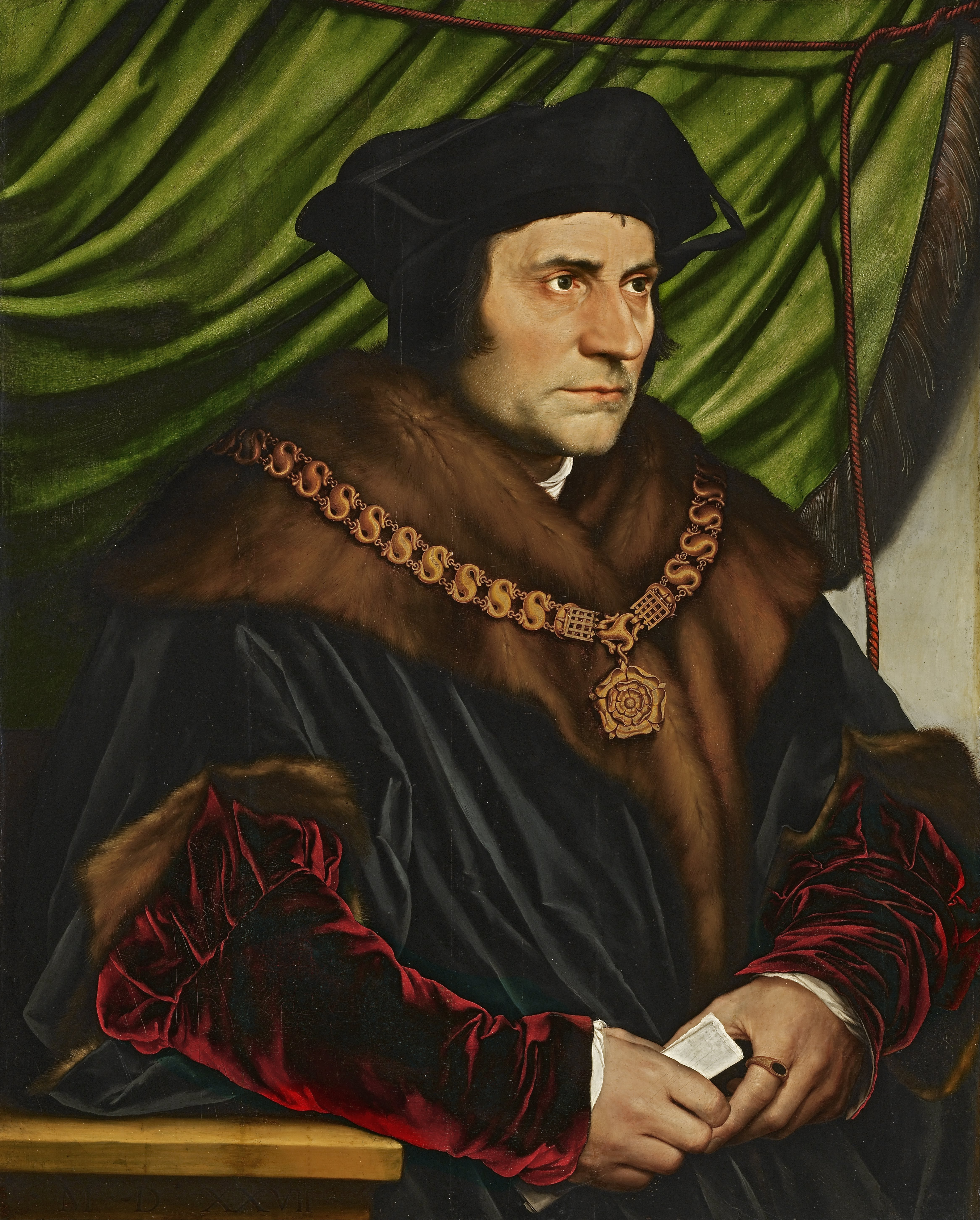
Sir Thomas More (1478-1535)

Our image of Renaissance humanist Thomas More owes much to his depiction by actor Paul Scofield in the adaptation of Robert Bolt's play A Man For All Seasons. That More is pious yet forward thinking, slavishly loyal to his faith and ideals, a steadfast adherent to oaths and laws. Much of this is no doubt true, but our image of More as a fully modern man is battered by his enthusiastic participation in rooting out the Protestant Reformation in England. While More was Lord Chancellor, six Protestant heretics were burned at the stake, and of one he declared he "burned as there was neuer wretche I wene better worthy."

As we know from A Man For All Seasons, More, loyal to the authority of the Pope, refused to swear an oath declaring King Henry VIII the Supreme Head of the English Church. He was convicted of false charges of treason and sentenced to be hanged, drawn, and quartered, but Henry commuted this to decapitation. He declared "I die the king's good servant, and God's first" and was decapitated by axe on July 6, 1535. His body was buried in an unmarked grave in the Tower of London. His head was stuck on a pike on London Bridge for a month until rescued (likely through bribery) by his daughter Meg Roper. More was canonized as a Catholic saint in 1935 by Pope Pius XI.

Friday, July 1, 2011

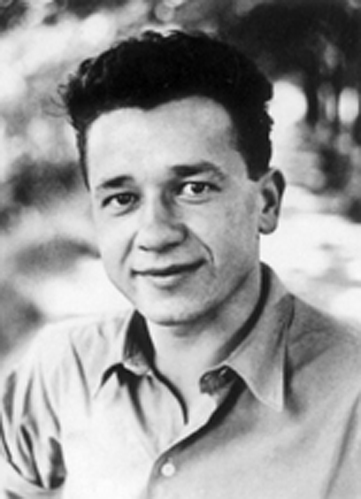
Tadeusz Borowski (1922-1951)

Polish author Tadeusz Borowski was born in Zhytomyr in the Ukraine. His parents were victims of the Soviet Gulag and forced resettlement until the family was repatriated to Poland and settled in Warsaw. When the Nazis occupied Poland, Borowski was part of the educational and literary underground, studying literature in secret schools, writing for underground newspapers, and secretly publishing his first poetry collection, Gdziekolwiek Ziemia (Wherever the Earth).

In 1943, he and his fiancee were arrested by the Gestapo in the apartment of a close friend. and eventually ended up in Auschwitz. They were spared the gas chamber because at that point the Nazis were (for the most part) only gassing Jews. Borowski worked at the railway ramp where arriving Jews were relived of their belongings and herded to the gas chambers. Once, on a work detail to Birkenau, he was able to see his fiancee again briefly and at the sight of her shaven head told her "Don't worry, our children won't be bald."

After the war, he and his fiancee were resettled in different countries, but he persuaded her to leave Sweden and return to Poland, now a communist country, and they married. He worked as journalist and wrote his masterpiece, Pożegnanie z Marią (Farewell to Maria, translated into English as This Way for the Gas, Ladies and Gentlemen), a collection of dark and darkly comic stories about his experience at Auschwitz. His talent was obvious, but his work was denounced for "amorality, decadence, and nihilism". Initially enthusiastic about communism, he became disillusioned. The close friend who was arrested by the Gestapo was now arrested and tortured by the communists.

On July 1, 1951, three days after the birth of his daughter, Borowski committed suicide using a gas stove. It was his third suicide attempt. He was 28.