Showing posts with label actors. Show all posts

Saturday, August 6, 2011

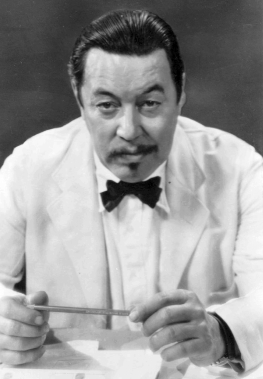
Warner Oland (1879-1938)

So how did a Swedish guy become the most famous Asian in the Western world?

Oland was born Johan Verner Ölund in Västerbotten County, the second most northern and second least populated county in Sweden. His family moved to the United States when he was thirteen. He took to the stage and became a Shakespearean actor and translator of Strindberg. He was vaguely Asian looking, something Oland attributed to Mongolian ancestry thanks to the invasions of Genghis Khan. In Hollywood's hands, he filled the roles of stock villain and stock ethnic character, sometimes both. In The Jazz Singer (1927) he was Cantor Rabinowitz, he was the title character, and incidentally the second most famous Asian character in the Western world, in The Mysterious Dr. Fu Manchu (1929), and he was a werewolf in Werewolf of London (1935). Okay, that last one doesn't count. Lest we think that this is a bizarre anachronism, think about how many ethnicities Scottish actor Sean Connery has played.

Hollywood was such in those days that aside from Anna May Wong and a few others, roles for Asians, even playing Asian characters, were few and far between. White actors playing Asians was the norm. A Swedish guy playing an Asian seems an especially egregious example, and perhaps it is, but there are plenty of strange examples of white guys who don't even vaguely look Asian playing Asian roles. Case in point: John Wayne as Warner Oland's ancestor Genghis Khan in The Conqueror (1956).

So Warner Oland slipped into the role of Chinese detective Charlie Chan with easy. Oland appeared in sixteen Charlie Chan films and the series became a worldwide success. When Oland died of pneumonia in a Stockholm hospital on August 6, 1938, the rest of his final film was reshot Ed Wood style with another actor, none other than Peter Lorre. The Charlie Chan series continued, with much less success, with another white actor, Sidney Toler.

A fascinating look at the Charlie Chan series, Hollywood yellowface, and the inspiration for Chan, real life Hawaiian detective Chang Apana, is Prof. Yunte Huang's 2010 book Charlie Chan: The Untold Story of the Honorable Detective and His Rendezvous with American History.

Wednesday, July 27, 2011

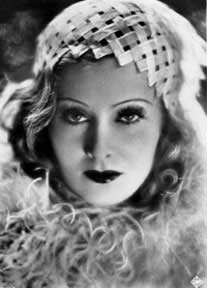
Lilian Harvey (1907–1968)

Actress Lillian Harvey was born Helene Lilian Muriel Pape in England to an English mother and a German father. She spoke 13 languages and made films in four of them, starting in 1924. The next year German producer Richard Eichberg discovered her and made her a leading lady. She was churning out about four films a year and became one of the most popular actresses in Germany. One Hungarian nobleman was so entranced by her that she offered her a castle. The castle later became a tractor factory.

She and popular leading man Willy Fritsch became the Brad and Angelina of Weimar Germany, their romance on and off screen milked for all the publicity it could produce. They starred in 11 films together, the most popular of which was Der Kongreß tanzt ("The Congress Dancers"), a lavish musical comedy released in three different languages. Frisch played Tsar Alexander I, who romances a humble glove seller played by Harvey. This public romance lasted until Frisch actress Dinah Grace in 1937.

In Tarintino's Inglorious Basterds, Gobbels happily sings a duet by Harvey and Fritsch from Glückskinder (a German version of It Happened One Night) called "Ich wollt' ich wär ein Huhn" ("I wish I were a chicken") but he snaps at the mention of Harvey's name. This is a good reflection of the Nazi's love hate relationship with Harvey, which became mostly hate towards the end of the 30s. She was pilloried for a brief attempt to make it in Hollywood but welcomed back with open arms in 1935. The Gestapo kept an eye on her because she consorted with Jews and grilled her choreographer Jens Keith, who was jailed under the Nazi anti-gay law Paragraph 175, promptly fled the country when she posted bail for him. She left the country again herself in 1939 and the Nazis revoked her citizenship in 1943. After making two movies in Vichy France in 1940, her film career was over.

At the end of her life, Harvey retired to the resort town of Antibes on the French Riviera, where she operated a souvenir shop and raised edible snails. She died there at age 61.

Monday, July 25, 2011

Judith Barsi (1978-1988)

József and Maria Barsi fled the Soviet crackdown on the Hungarian Revolution of 1956 and settled in Los Angeles. He worked as a plumber. She wished to be an actress and transferred those dreams to her only child, Judith Eva Barsi. Judith was discovered at an ice skating rink at age five and went on to star in over 70 commercials, over a dozen television episodes, and ten films. Those movies include Jaws: The Revenge, All Dogs Go To Heaven, and the one she is best remembered for, The Land Before Time, where she provided the voice of the sweet and naive parasaurolophus Ducky and her trademark "Yep! Yep! Yep!"

One of Judith's roles was a miniseries called Fatal Vision, where her character is killed by her unhinged father. This would prove unfortunately ironic as József was rapidly becoming unhinged herself. He was usually drunk and often paranoid. He physically and mentally abused his family, once giving Judith a bloody nose by throwing a frying pan at her, another time putting a butcher knife to Judith's throat threatening to kill her if she did not return from filming Jaws in the Bahamas.

All of this was not unknown to the outside world. A child psychologist identified the abuse and Child Protective Services attempted to intervene, but Maria would not press charges. On July 25, 1988, József shot Judith and Maria, doused their bodies and their house in gasoline and set it on fire, then shot himself. The bodies were discovered two days later.

Saturday, July 23, 2011

Vic Morrow (1929-1982)

Vic Morrow became a household name thanks to his lead role as Sgt. Chip Saunders in the ABC World War II drama Combat!, which spent longer on television than the US spent in World War II. His film career was relatively undistinguished, however. There were a few choice roles here and there, like the antagonists in The Blackboard Jungle (his debut role) and The Bad News Bears, but there were a lot more clunkers like the Japanese Star Wars rip-off Message from Space. His penultimate role was in the dystopian biker gang flick 1990: The Bronx Warriors, so he jumped at the chance to star in Stephen Spielberg-produced Twilight Zone: The Movie.

It probably seemed like a good idea at the time: four noted directors taking the classic television series to the big screen. What actually happened was they produced four inferior versions of far superior television episodes. The first segment, "Time Out", was based on a tense World War II episode starring Leonard Nimoy and Dean Stockwell, "A Quality of Mercy". In the hands of director John Landis, it became a heavy handed tale of a bigot played by Vic Morrow who is forced to become a series of various historical victims of racial oppression.

There are strict rules concerning child actors limiting the number of hours and the times of day they can work, but Landis had two child actors in Twilight Zone, seven year old Myca Dinh Le and six year old Renee Shin-Yi Chen, filming a scene with Morrow at 2:30 am. It turns out they were being paid under the table to avoid these rules. In this scene set during the Vietnam War, Morrow has to carry the two children across a pond away from a village engulfed in flames while a helicopter flew overhead. However, on this early morning shoot the pyrotechnics went off too close to the helicopter, sending it spinning out of control. It crashed into the pond right on top of the actors, decapitating Vic Morrow and Myca Dinh Le and impaling Renee Shin-Yi Chen.

Landis and a number of the crew were hit by manslaughter charges as well as civil lawsuits from the families of the actors, including Morrow's daughter actress Jennifer Jason Leigh. Landis avoided a criminal conviction, the other directors rushed through their segments, and Twilight Zone: The Movie was released to lukewarm reviews.

Tuesday, July 19, 2011

Jack Warden (1920-2006)

Jack Warden made a long career out of playing gruff police officers, gruff sports coaches, gruff military men, gruff newspaper men... well, you get the idea. A character actor who was probably one of the reasons they invented the phrase, he appeared in over 100 films.

Warden was a welterweight boxer and a merchant sailor before joining the Army during World War II. He smashed his leg landing on a fence during a nighttime practice paratrooper jump, just before D-Day. He recovered in time for the Battle of the Bulge, but not before reading a play by Clifford Odets and deciding to become an actor.

Warden appeared in many great films: The Asphalt Jungle, From Here to Eternity, 12 Angry Men, Run Silent, Run Deep, The Sound and the Fury, All the President's Men, The Great Muppet Caper, Mighty Aphrodite, Bulworth. And many not so great: Beyond the Poseidon Adventure, Problem Child 1 and 2. He was nominated for Best Supporting Actor for two films (both starring Warren Beatty), Shampoo and Heaven Can Wait. He did plenty of television work too. He earned an Emmy playing a gruff football coach in the TV movie Brian's Song and was nominated twice for his starring role as a gruff private detective in Crazy Like a Fox. Interestingly, he appeared in two episodes of The Twlight Zone, both prominently featuring robots, though in very different settings: in one he played a convicted criminal exiled on an asteroid with only a female robot for company, in another he played a gruff baseball manager who acquires a robot pitcher.

Jack Warden died on July 19, 2006.

Sunday, July 3, 2011

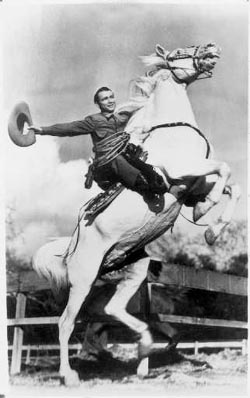
Trigger (1932-1965)

Golden Cloud was a palomino born on a San Diego ranch and sold at age three to a company that supplied animals to film makers. Olivia de Havilland rode side saddle on him in as Maid Marion in the 1938 classic The Adventures of Robin Hood. Golden Cloud soon crossed paths with cowboy star Roy Rogers. Noting how quick he was, both in terms of speed and intelligence, he renamed him Trigger and purchased him for the princely sum of $2,500. Together they fought bad guys in over 80 movies and 100 television episodes.

When Trigger died at age 33, Rogers couldn't bear the thought of burying his friend. Thanks to taxidermy, Trigger was preserved in the Roy Rogers and Dale Evans Museum. Two fiberglass replicas were made of Trigger, one for the top of the museum, one for the Denver Broncos scoreboard. When the museum closed its doors, Trigger was auctioned off by Christie's in 2010 for $266,500 to television station RFD, which plans a Western-themed museum.

Saturday, July 2, 2011

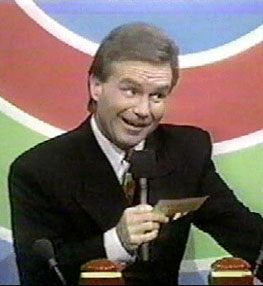
Ray Combs (1956-1996)

Raymond Neil Combs, Jr. was a practicing Mormon who married his childhood sweetheart and had six children with her. He also moved to Los Angeles to make it as a comedian. After a series of bit roles and a successful Tonight Show appearance where he received a standing ovation, in 1988 Combs was tapped to host a revival of the game show Family Feud. He was a sharp, straight-laced contrast with the original host, licentious British rake Richard Dawson. After six years, Combs was unceremoniously dumped and Dawson returned.

Combs' life went downhill. A back injury in a car accident left him in constant pain, his marriage ended, two comedy clubs he owned failed, and the bank foreclosed on his Ohio home. One day he wrecked his California home and the police found him bloody from repeatedly banging his head against the wall. He was admitted to a mental hospital and placed on suicide watch. Despite this, he hung himself with his bedsheets in his hospital room on July 2, 1996 at the age of 40.

Wednesday, June 29, 2011

Fatty Arbuckle (1887-1933)

Silent film star Roscoe Conkling Arbuckle was born weighing 13 pounds, so much that his since both his parents were slim, his father refused to believe that he baby was his son and named him after notorious womanizer Senator Roscoe Conkling. When his mother died when he was 12, his father abandoned him and Arbuckle was forced to fend for himself. His road to stardom began with a talent show where he initially unimpressed the audience. About to be yanked offstage by the traditional shepherd's crook, he dodged it by somersaulting into the orchestra pit and the crowd was won over. Arbuckle was remarkably agile despite the size that gave him the nickname he hated and would display that agility in dozens of comedies, working alongside the likes of Mack Sennett and Buster Keaton. A great example is 1915's Fatty's Tintype Tangle, a physical comedy tour de force where he flips bowler hats and plates with ease, shoves a guy backwards onto a trolley, and dances on top of power lines. Were the movies not silent, he could have also displayed a singing voice that even Caruso praised. In 1918, he signed a three million dollar contract with Paramount.

His career was stopped cold one night in 1921. He was recovering from an on set accident where he suffered second degree burns to both ass cheeks. He and two friends checked into a hotel and invited some women. One of them was Virginia Rappe, whose frequent flings with cast and crew prompted Mack Sennett to blame her for an outbreak of pubic lice and have his studios fumigated. She suffered from chronic bladder inflammations and had had a series of back alley abortions which may have contributed to her poor health. Rappe became seriously ill during the party but the hotel doctor thought she was just drunk. Two days later, she went to the hospital and died. Her friend Bambina Delmont told the police Arbuckle raped her.

Arbuckle was put on trial for murdering Rappe three times in what became one of Hollywood's most notorious scandals. Rumors were flying wildly; a story of Arbuckle rubbing ice on Rappe's stomach to alleviate her pain became a story of him penetrating her with a Coca-cola bottle and replica bottles were hawked by unscrupulous souvenir dealers. Howard Hughes said that the scandal "sold more newspapers than any event since the sinking of the RMS Lusitania." Delmont was on a lecture tour, the DA was gunning for higher office. Everyone was profiting except for Arbuckle, who despite avoiding conviction for murder in three trials, had lost his fortune and his career.

He worked as a director on some films, but he "directed" by just sitting in his director's chair listless, like a broken man. Eventually he worked his way back to success, and in 1932 signed with Warner Brothers to make six short comedies, the only sound films he appeared in. He finished filming the final one and the next day, June 29, 1933, he signed a WB contract to star in a full-length feature film. He said "This is the best day of my life." That night, he had a heart attack and died in his sleep. He was 46.

Saturday, June 25, 2011

Obituaries: Gene Colan (1926-2011) and Peter Falk (1927-2011)

A pair of obituaries for June 23, 2011:

Gene Colan was one of the best artists of the heyday of Marvel Comics, known for his moody, fluid, expressive drawings. He worked on many titles, but he's best remembered for his work on Daredevil, Howard the Duck, and The Tomb of Dracula.

Peter Falk had a long career as an actor and is most beloved for his role as the rumpled idiosyncratic detective Columbo. The video below is from his role as the grandfather/narrator in The Princess Bride.